Wearphone
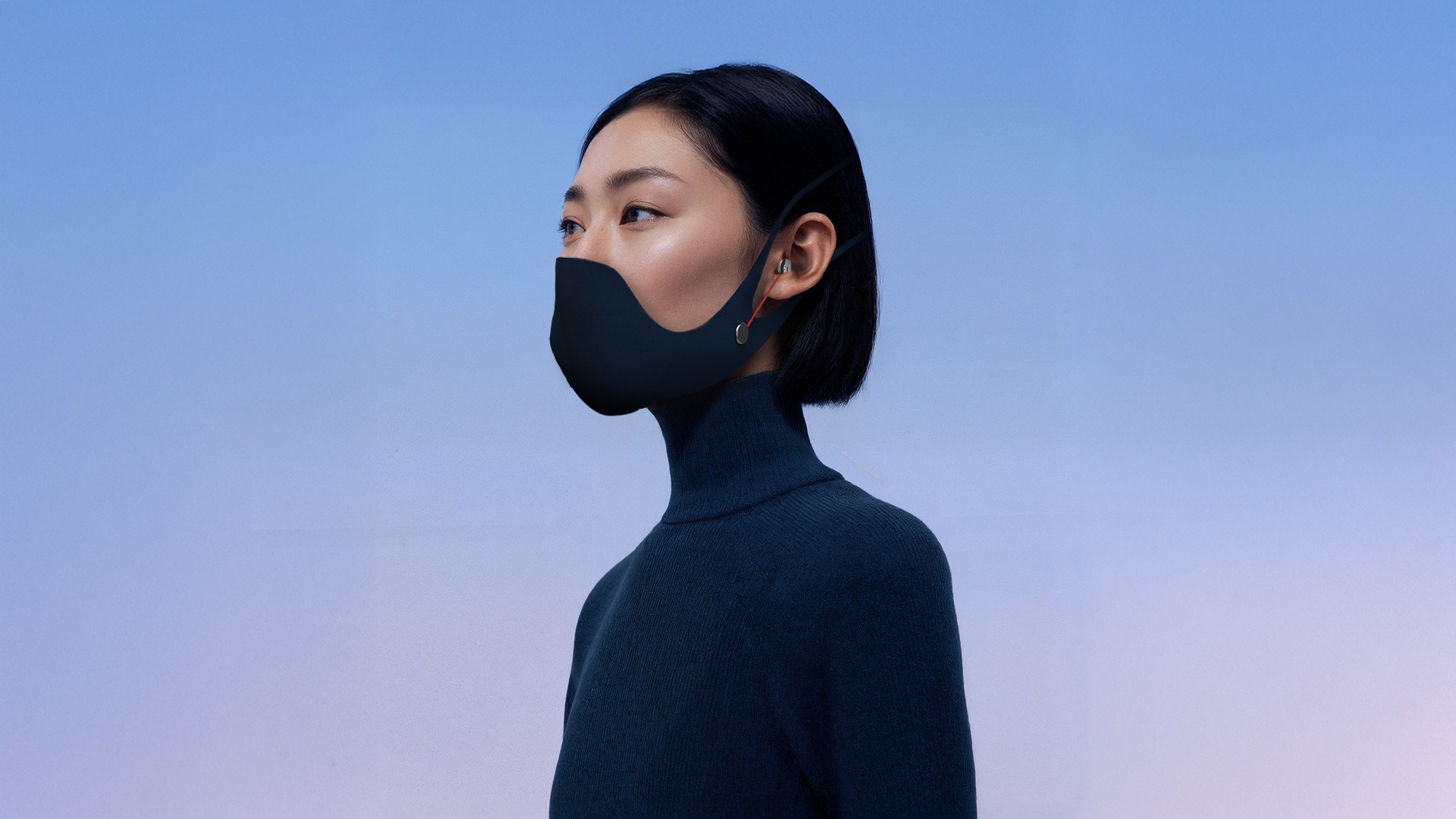
Wearphone is a hardware device designed for Verne to let you speak freely while keeping your voice private, enabling a new way to interact with vocal AI. I worked with the founders in the early stage of the product, across two concept phases, helping shape the idea, explore form proposals and frame the experience. This work contributed to the product that Verne later developed and presented at CES 2026 in Las Vegas.
Project details
Type
Product Design
When
2025
Role & responsabilities
Concept Development Product Design Direction Experience & Interaction Design
Team
1x Designer
Wearphone
Wearphone is a hardware device designed for Verne to let you speak freely while keeping your voice private, enabling a new way to interact with vocal AI. I worked with the founders in the early stage of the product, across two concept phases, helping shape the idea, explore form proposals and frame the experience. This work contributed to the product that Verne later developed and presented at CES 2026 in Las Vegas.
Project details
Type
Product Design
When
2025
Role & responsabilities
Concept Development Product Design Direction Experience & Interaction Design
Team
1x Designer
Wearphone
Wearphone is a hardware device designed for Verne to let you speak freely while keeping your voice private, enabling a new way to interact with vocal AI. I worked with the founders in the early stage of the product, across two concept phases, helping shape the idea, explore form proposals and frame the experience. This work contributed to the product that Verne later developed and presented at CES 2026 in Las Vegas.
Project details
Type
Product Design
When
2025
Role & responsabilities
Concept Development Product Design Direction Experience & Interaction Design
Team
1x Designer

First Concept Direction
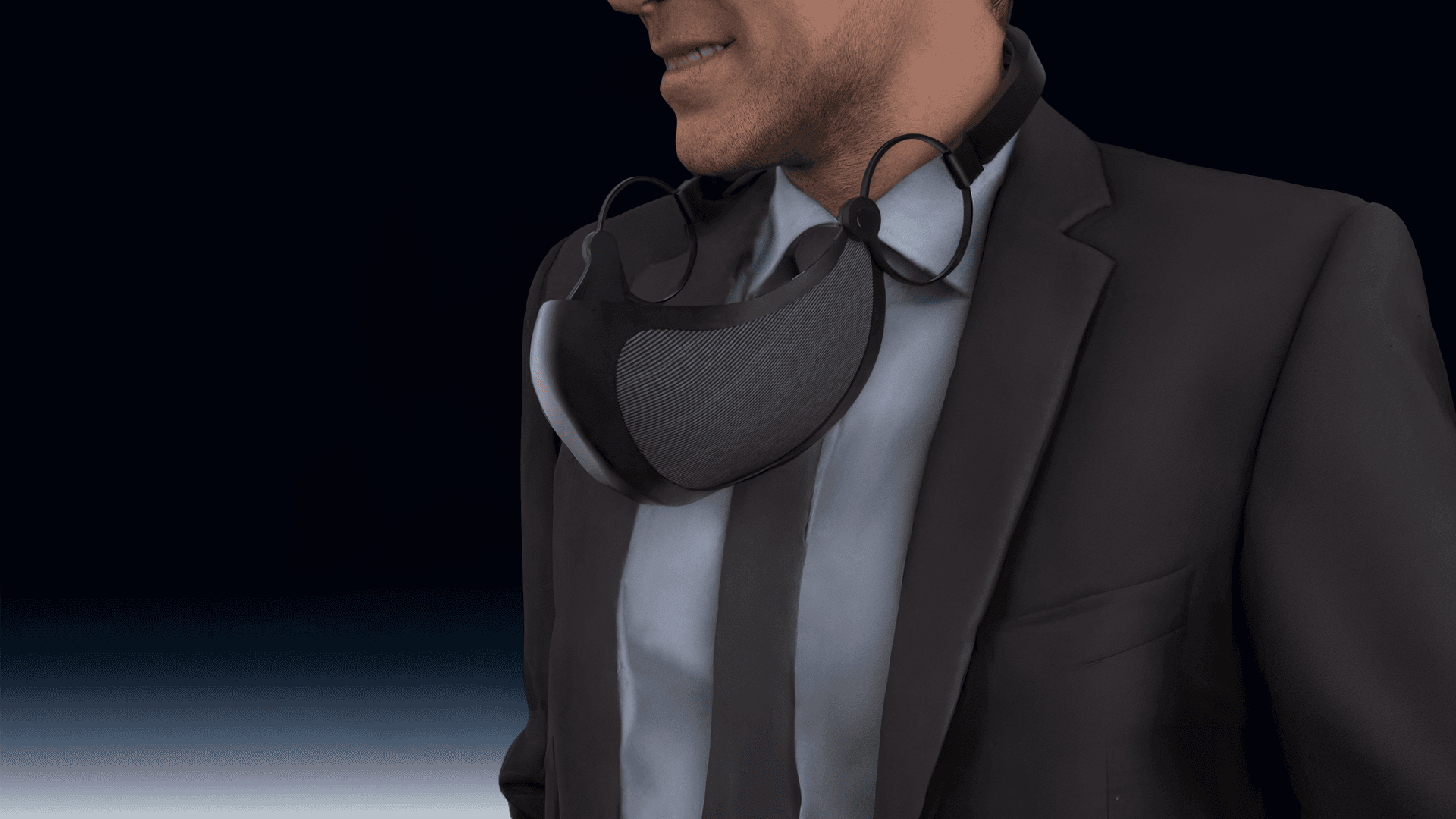
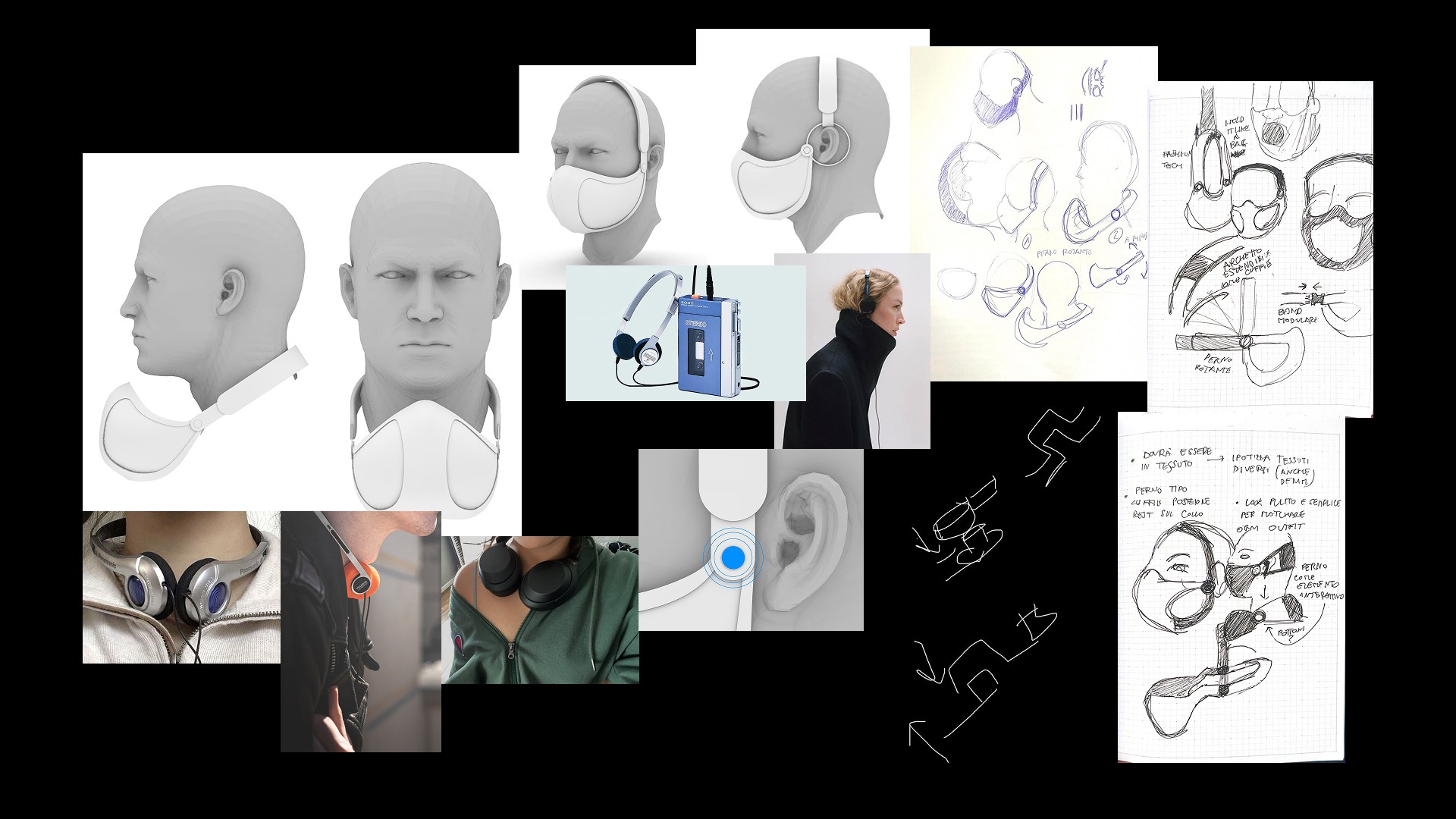
The first concept was heavily influenced by Japanese culture and their approach to music hardware. I looked at classic Walkman headphones and how they naturally fit both the head and neck.
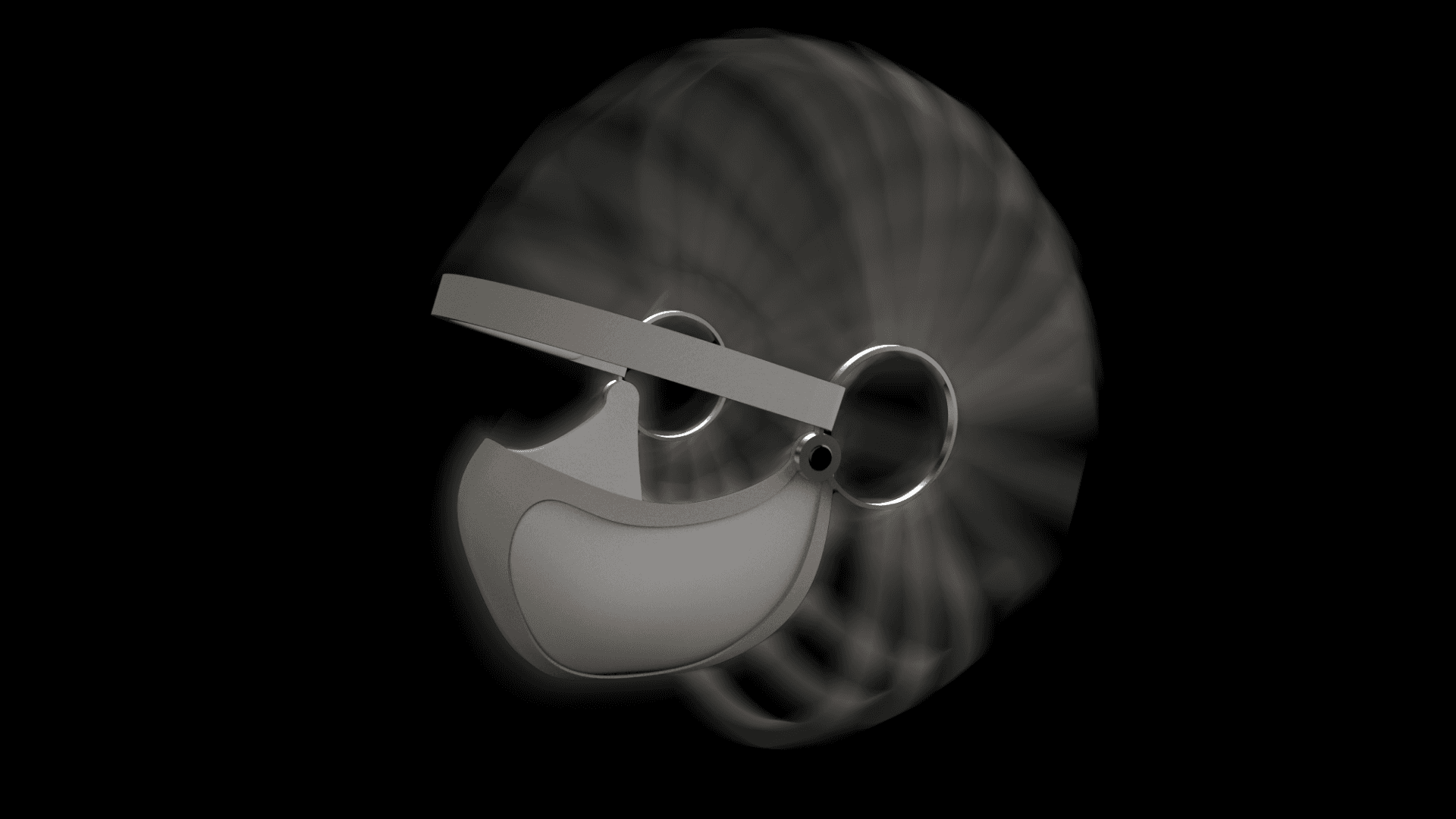
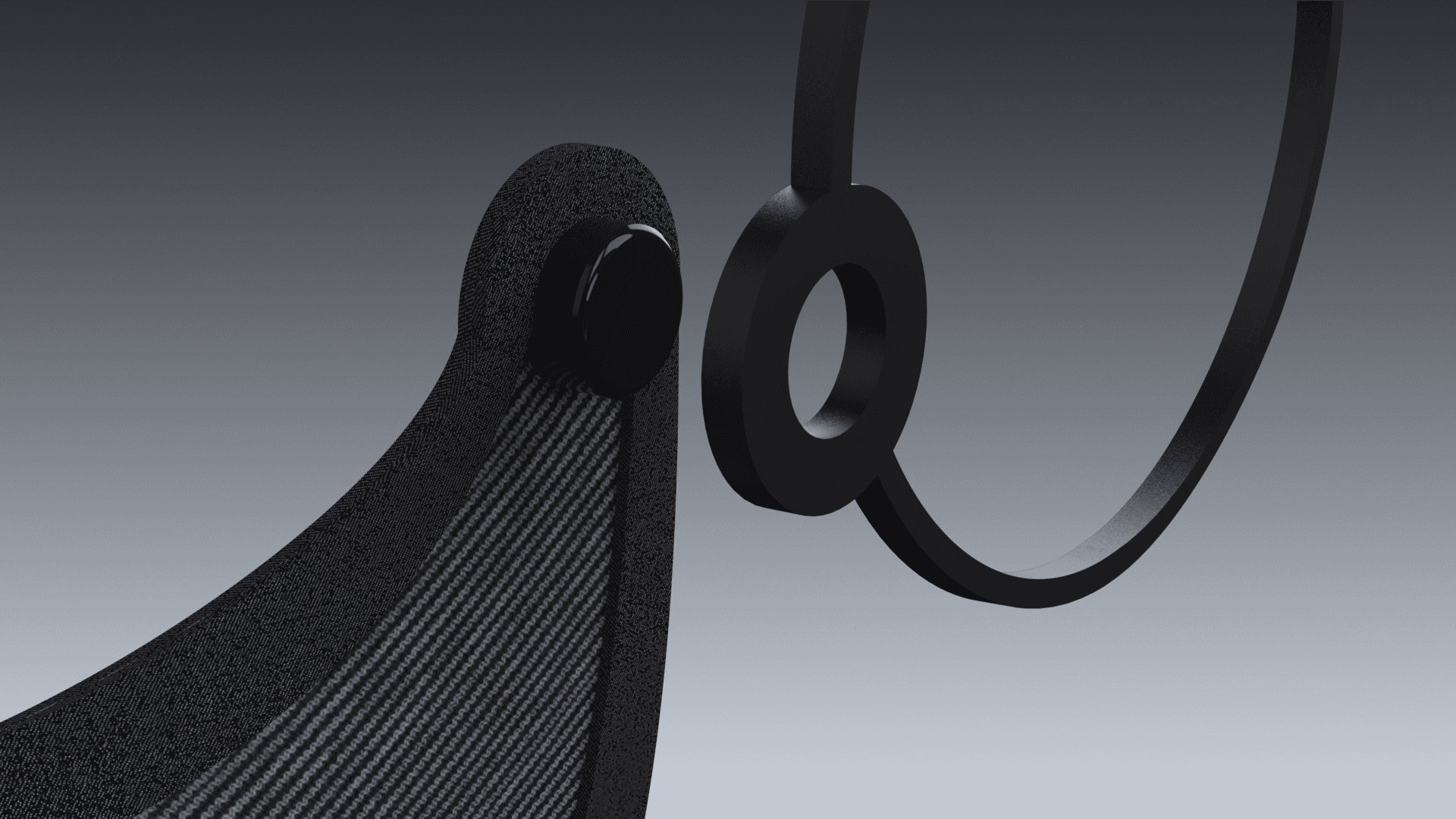
That's where the core idea came from: a rotating pivot system that allows for 2 positions, one for resting on the neck and one for use on the face.
To keep it simple, the same rotating pivot also becomes the main interaction button, one on each side. A tap or long press (3+ seconds) activates different functions.
The headband system uses a quick-release magnetic mechanism, with the band attaching to the rotating pivots.
Fashion × Tech
If you wear something on your face, it inevitably becomes fashion.
So it's not just how you use it, but also how you wear it.
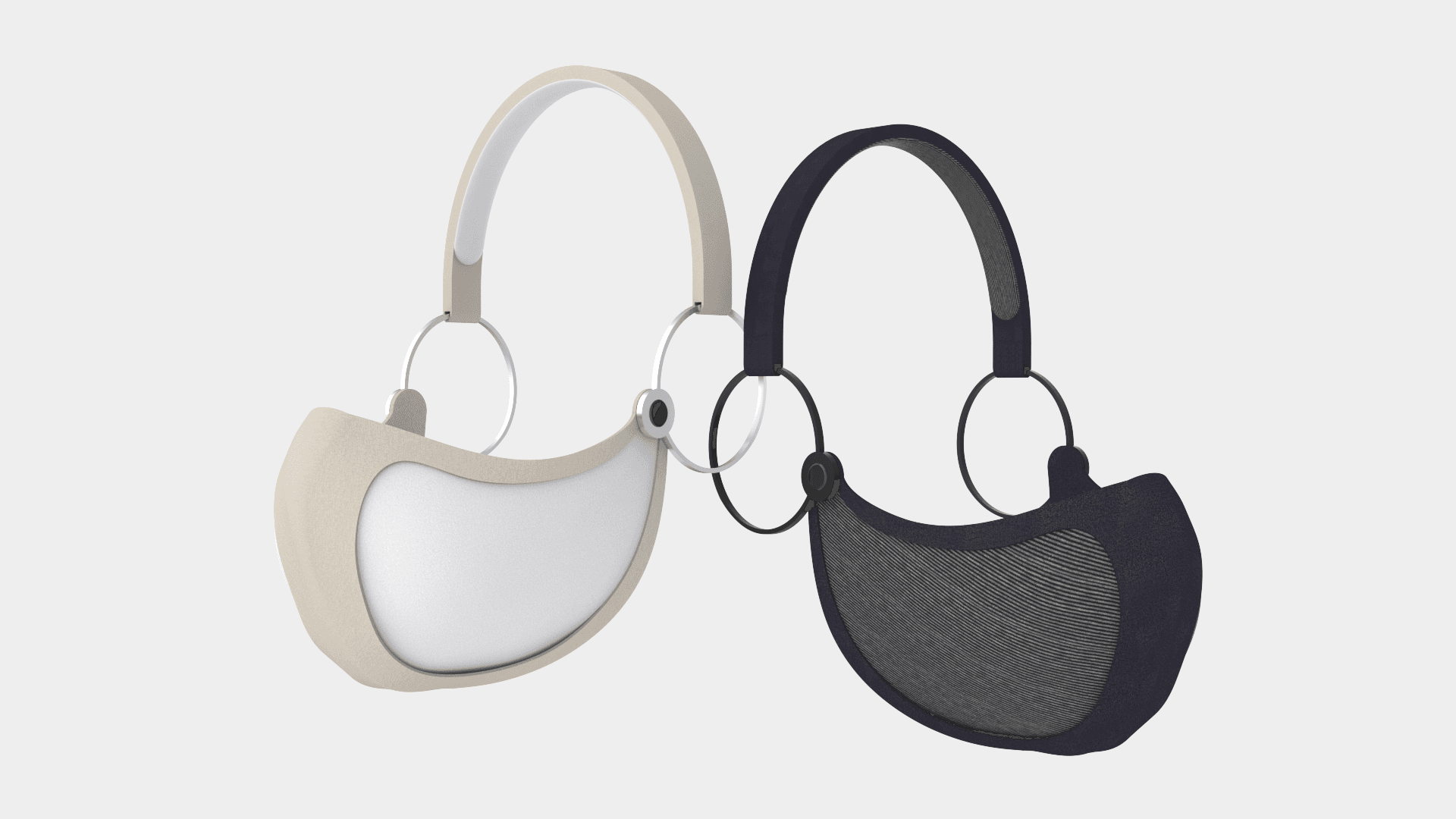
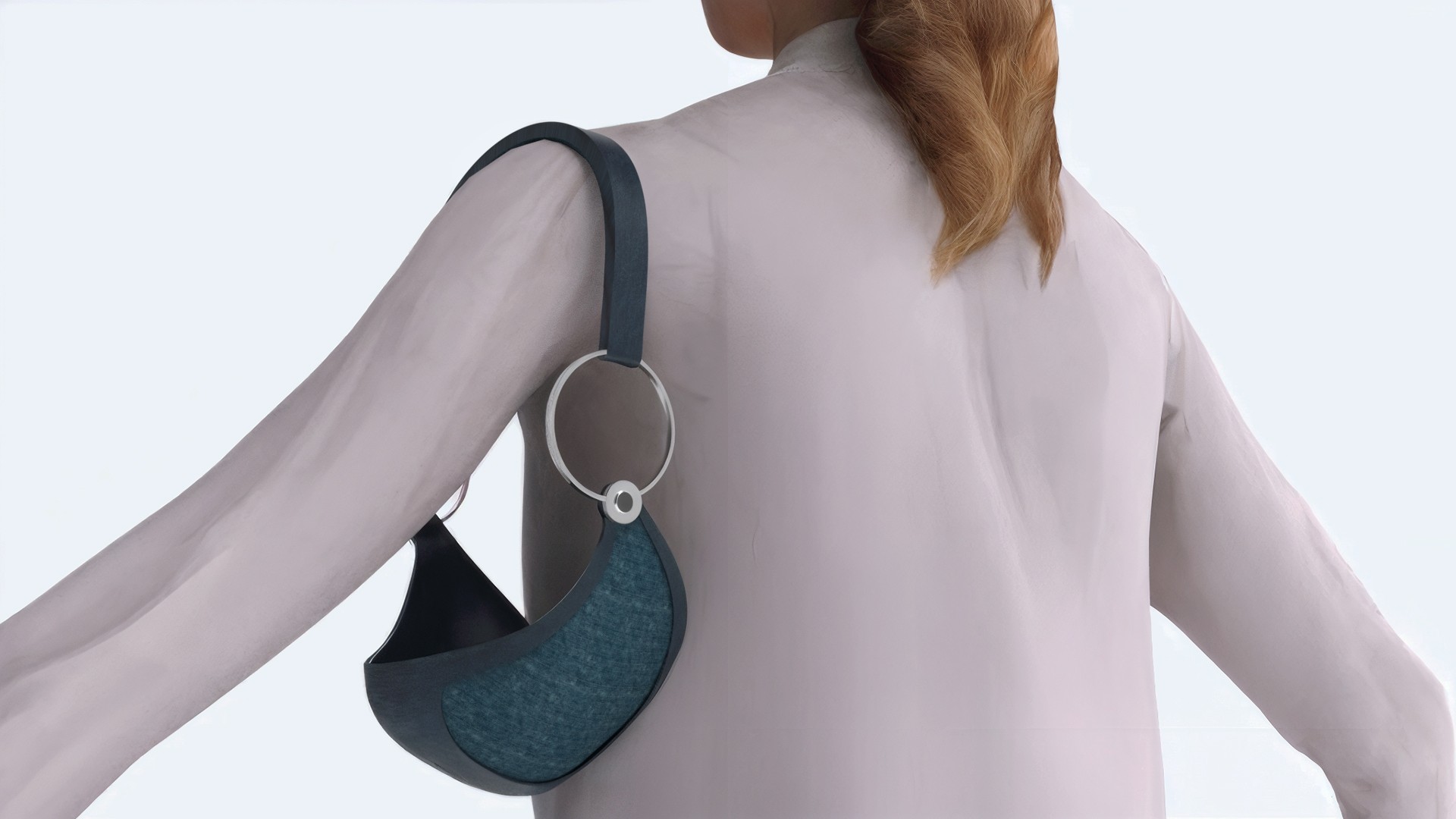
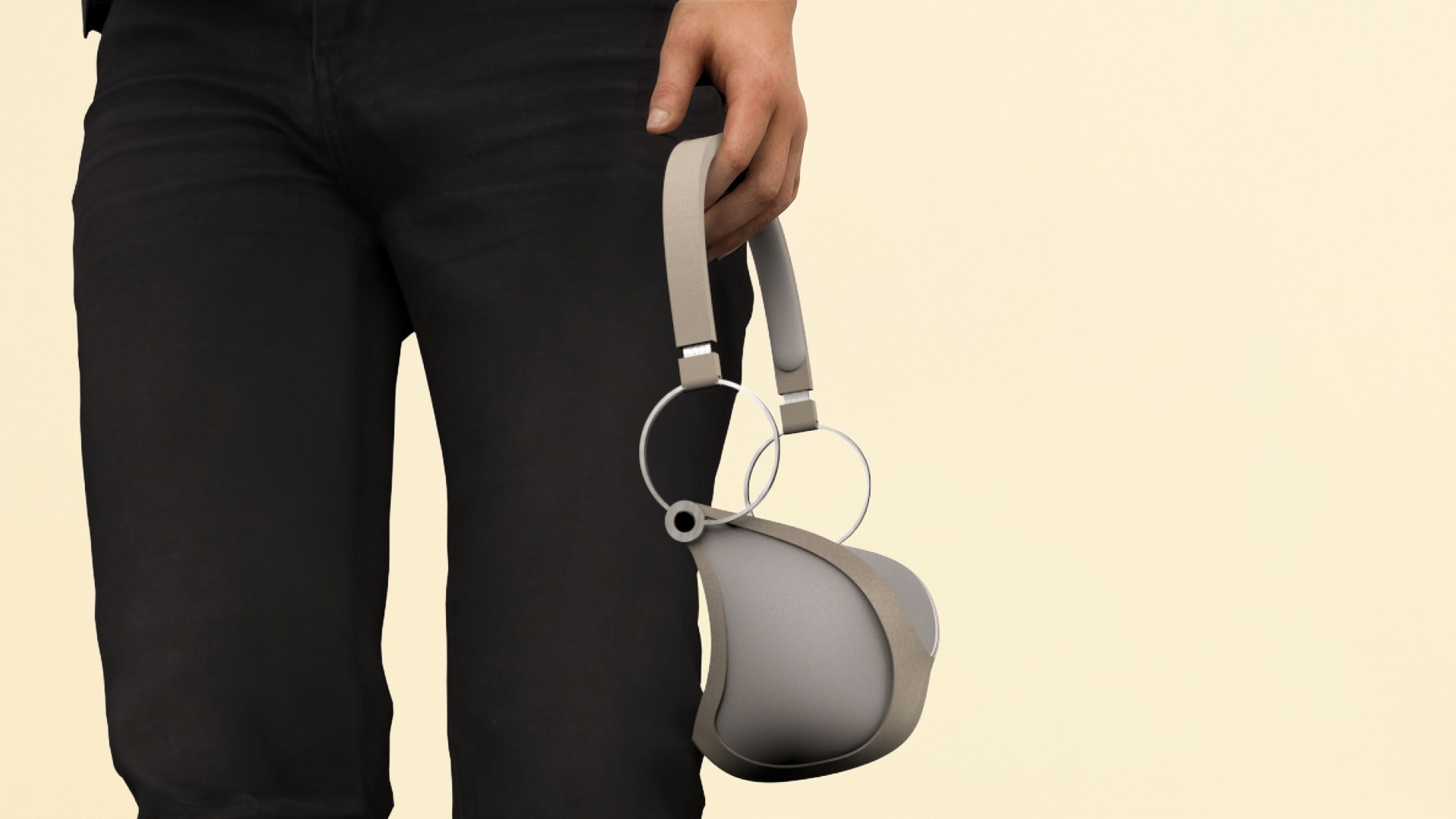
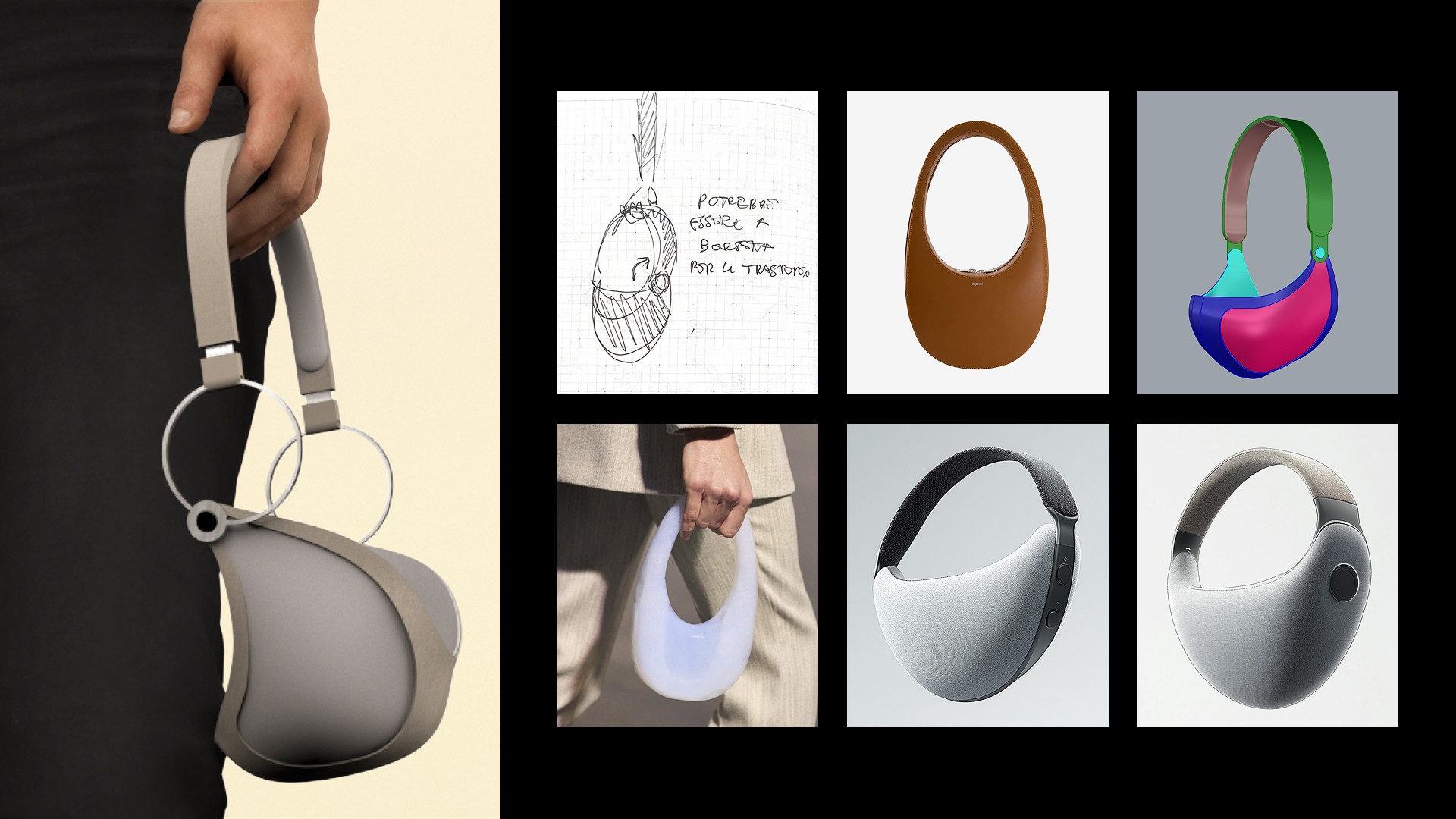
When the device is not in use, it also becomes a wearable object, almost like a handbag. No longer seen only as a technological product, but as something you carry with you, hold in your hand, or rest on your shoulder like a bag.
The outer shell takes on an aesthetic role and becomes a removable, washable, and replaceable layer of fabric. I explored two versions in neoprene and fabric, along with an option in Japanese denim.
Second Concept Direction
This version was developed later, after working on Verne's identity, so that the product and the brand would start speaking the same language.
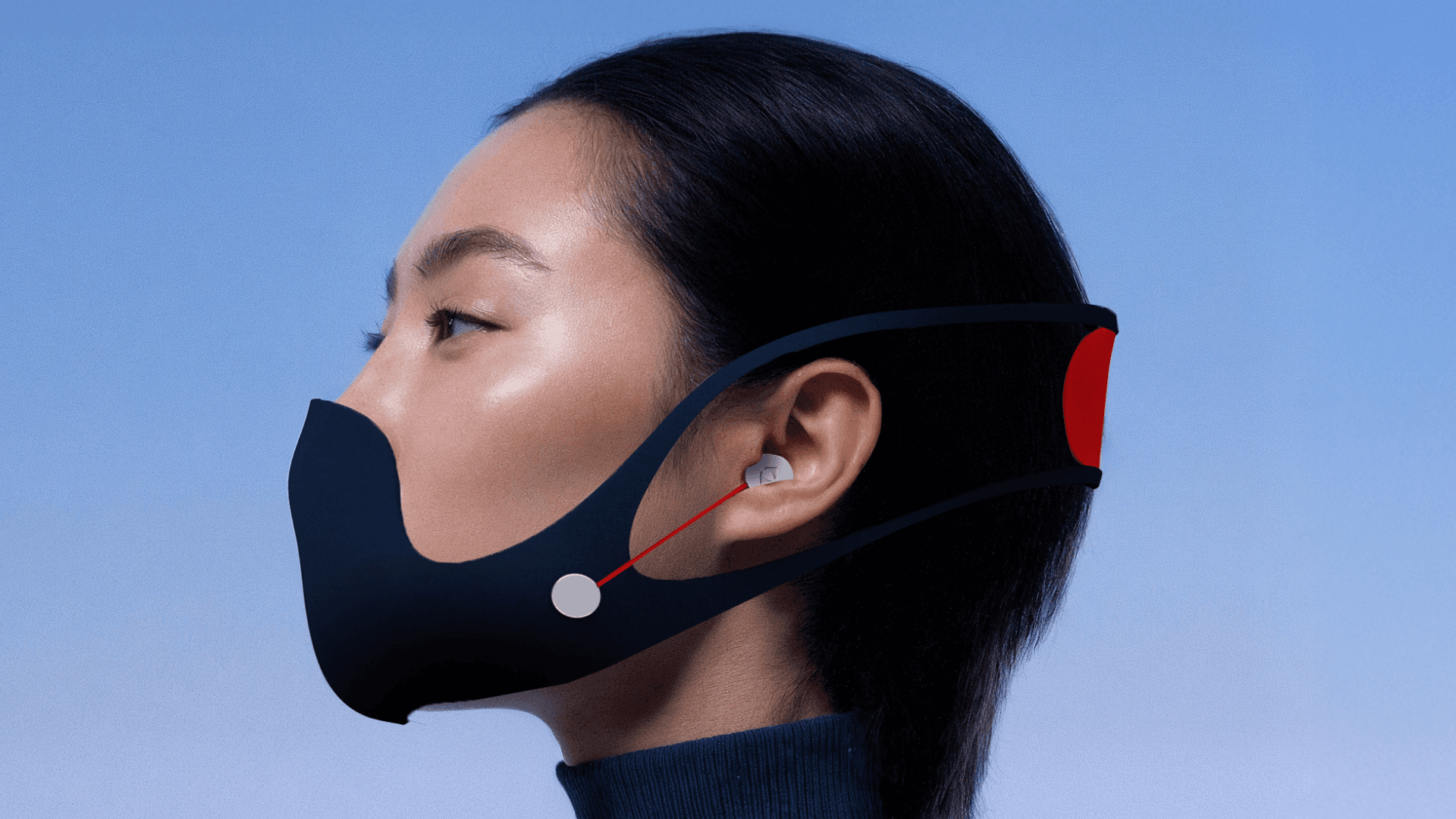
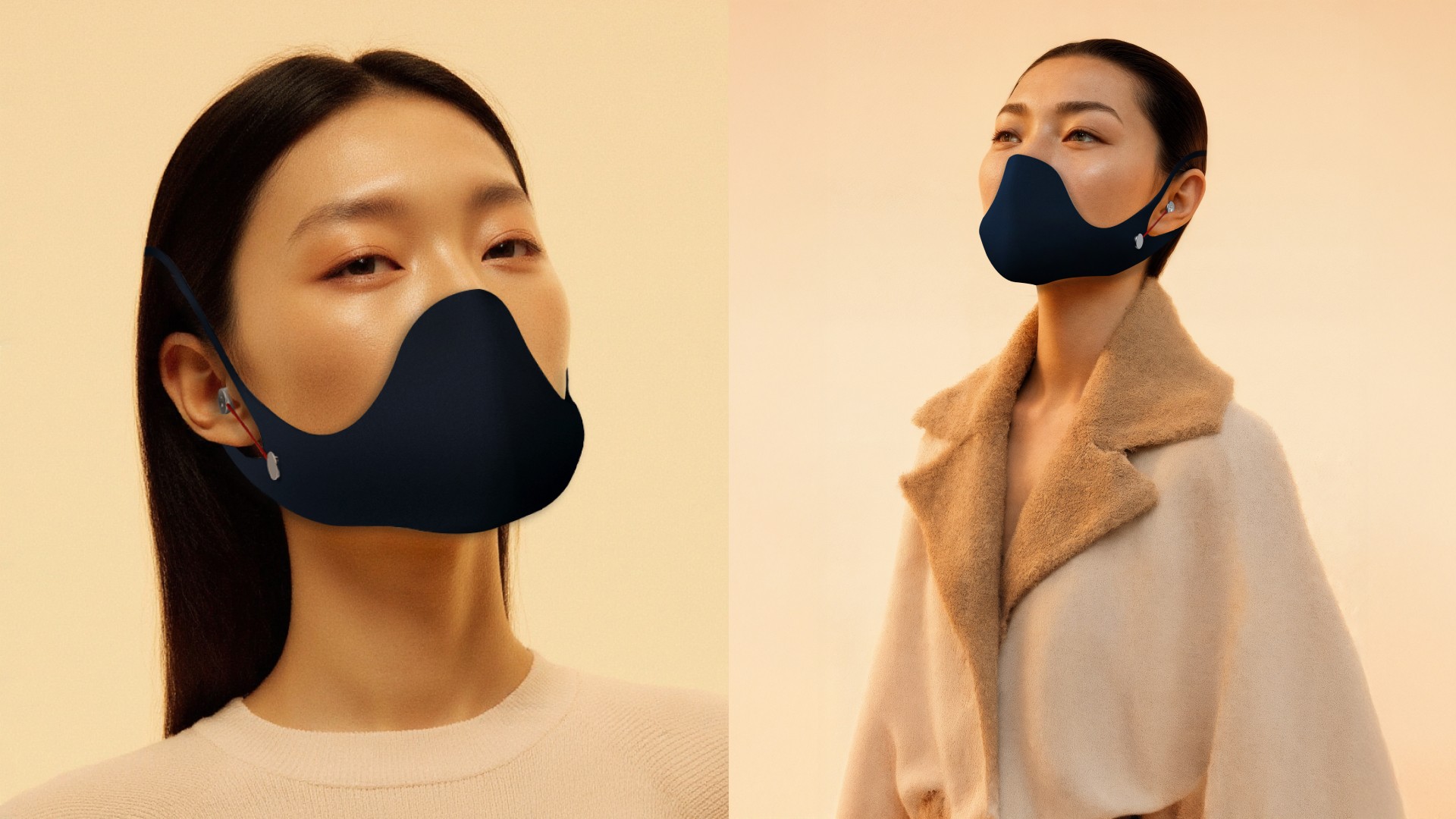
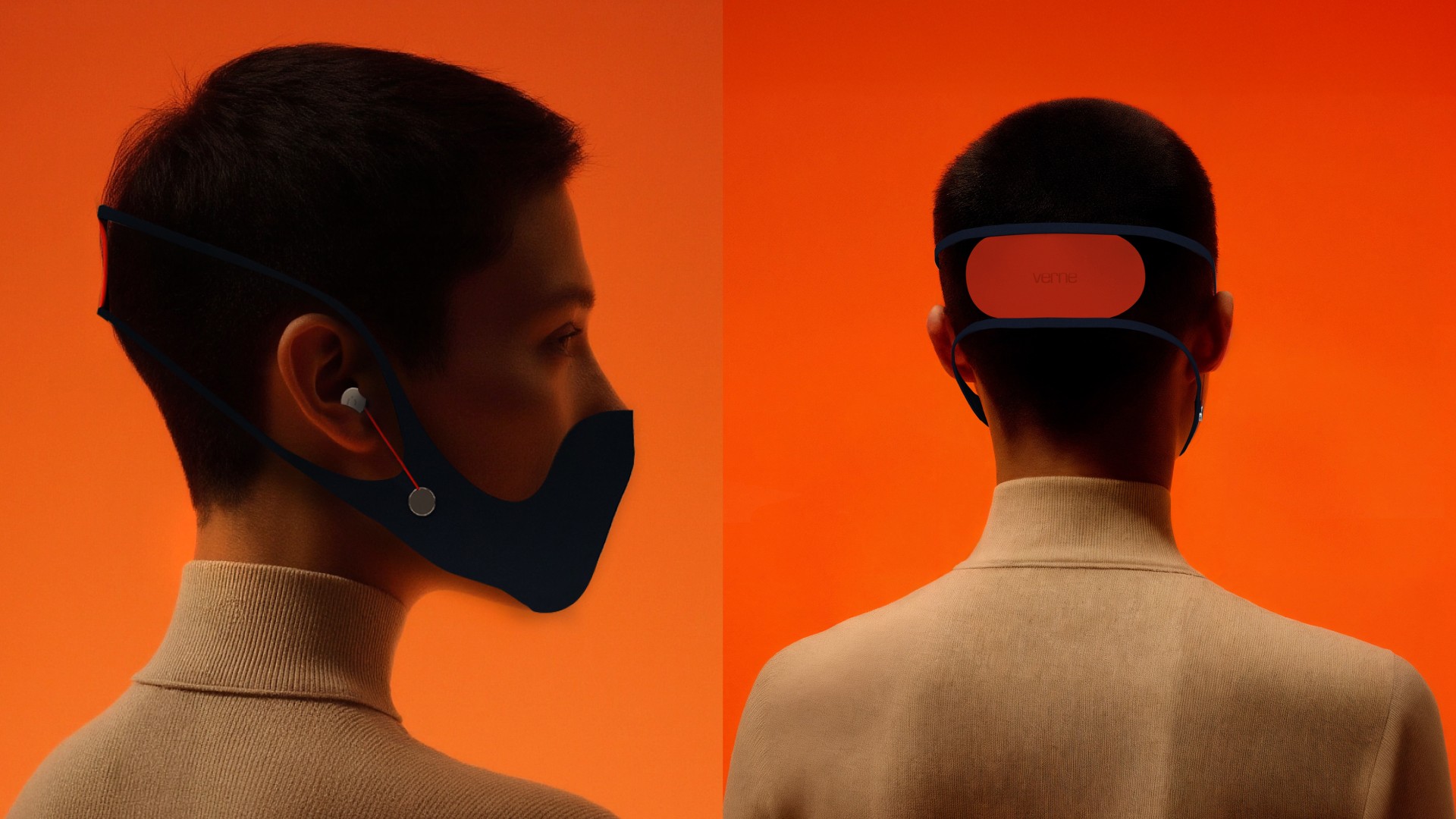
This direction imagines Wearphone as a single unified piece. It features a dark blue neoprene body with orange accents, which are the brand's colors.
On the back, a soft orange cushion with the Verne brand makes the product recognizable from a distance. The buttons are connected by a thin cable to the metal earphones with the Verne logo engraved on them.

The process is the product
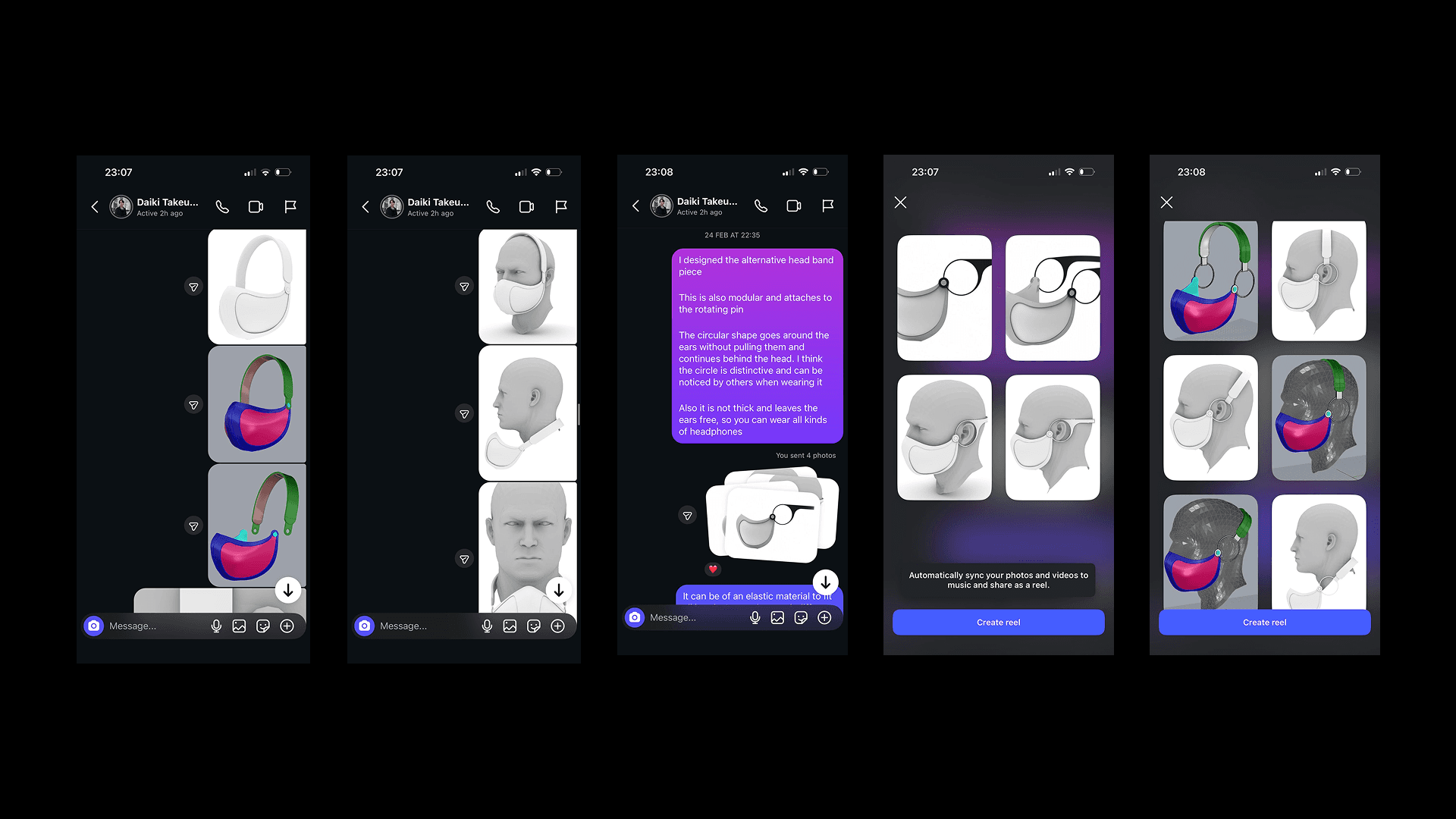
The work on Wearphone was not a linear process. Over the course of 2-3 months and two dedicated sessions with the founders, we exchanged calls, screenshots, ideas, and messages.
We explored 5-6 initial concepts, testing the behavior and feel of the product. Then we refined both the functionality and form through constant iteration.
Subsequently, prototypes and physical models developed in Japan helped us understand how the product behaves in real life.
The Golden Age of Audio
This project also comes from a simple belief: we are living in the golden age of audio. Voice is human, emotional, and direct. It carries nuance that screens can’t. In my presentation, I explored how audio is becoming the next interface layer: from earbuds to voice notes to AI agents. Wearphone fits right into this shift: it creates a private space for speech, letting you talk to AI in public without raising your voice or your phone. A small object that sits on your face, but really belongs to a much bigger story about how we will communicate next.


First Concept Direction
The first concept was heavily influenced by Japanese culture and their approach to music hardware. I looked at classic Walkman headphones and how they naturally fit both the head and neck.
That's where the core idea came from: a rotating pivot system that allows for 2 positions, one for resting on the neck and one for use on the face.
To keep it simple, the same rotating pivot also becomes the main interaction button, one on each side. A tap or long press (3+ seconds) activates different functions.
The headband system uses a quick-release magnetic mechanism, with the band attaching to the rotating pivots.


Fashion × Tech
If you wear something on your face, it inevitably becomes fashion.
So it's not just how you use it, but also how you wear it.
When the device is not in use, it also becomes a wearable object, almost like a handbag. No longer seen only as a technological product, but as something you carry with you, hold in your hand, or rest on your shoulder like a bag.
The outer shell takes on an aesthetic role and becomes a removable, washable, and replaceable layer of fabric. I explored two versions in neoprene and fabric, along with an option in Japanese denim.


Second Concept Direction
This version was developed later, after working on Verne's identity, so that the product and the brand would start speaking the same language.
This direction imagines Wearphone as a single unified piece. It features a dark blue neoprene body with orange accents, which are the brand's colors.
On the back, a soft orange cushion with the Verne brand makes the product recognizable from a distance. The buttons are connected by a thin cable to the metal earphones with the Verne logo engraved on them.


The process is the product
The work on Wearphone was not a linear process. Over the course of 2-3 months and two dedicated sessions with the founders, we exchanged calls, screenshots, ideas, and messages.
We explored 5-6 initial concepts, testing the behavior and feel of the product. Then we refined both the functionality and form through constant iteration.
Subsequently, prototypes and physical models developed in Japan helped us understand how the product behaves in real life.


The Golden Age of Audio
This project also comes from a simple belief: we are living in the golden age of audio. Voice is human, emotional, and direct. It carries nuance that screens can’t. In my presentation, I explored how audio is becoming the next interface layer: from earbuds to voice notes to AI agents. Wearphone fits right into this shift: it creates a private space for speech, letting you talk to AI in public without raising your voice or your phone. A small object that sits on your face, but really belongs to a much bigger story about how we will communicate next.


First Concept Direction
The first concept was heavily influenced by Japanese culture and their approach to music hardware. I looked at classic Walkman headphones and how they naturally fit both the head and neck.
That's where the core idea came from: a rotating pivot system that allows for 2 positions, one for resting on the neck and one for use on the face.
To keep it simple, the same rotating pivot also becomes the main interaction button, one on each side. A tap or long press (3+ seconds) activates different functions.
The headband system uses a quick-release magnetic mechanism, with the band attaching to the rotating pivots.


Fashion × Tech
If you wear something on your face, it inevitably becomes fashion.
So it's not just how you use it, but also how you wear it.
When the device is not in use, it also becomes a wearable object, almost like a handbag. No longer seen only as a technological product, but as something you carry with you, hold in your hand, or rest on your shoulder like a bag.
The outer shell takes on an aesthetic role and becomes a removable, washable, and replaceable layer of fabric. I explored two versions in neoprene and fabric, along with an option in Japanese denim.


Second Concept Direction
This version was developed later, after working on Verne's identity, so that the product and the brand would start speaking the same language.
This direction imagines Wearphone as a single unified piece. It features a dark blue neoprene body with orange accents, which are the brand's colors.
On the back, a soft orange cushion with the Verne brand makes the product recognizable from a distance. The buttons are connected by a thin cable to the metal earphones with the Verne logo engraved on them.


The process is the product
The work on Wearphone was not a linear process. Over the course of 2-3 months and two dedicated sessions with the founders, we exchanged calls, screenshots, ideas, and messages.
We explored 5-6 initial concepts, testing the behavior and feel of the product. Then we refined both the functionality and form through constant iteration.
Subsequently, prototypes and physical models developed in Japan helped us understand how the product behaves in real life.


The Golden Age of Audio
This project also comes from a simple belief: we are living in the golden age of audio. Voice is human, emotional, and direct. It carries nuance that screens can’t. In my presentation, I explored how audio is becoming the next interface layer: from earbuds to voice notes to AI agents. Wearphone fits right into this shift: it creates a private space for speech, letting you talk to AI in public without raising your voice or your phone. A small object that sits on your face, but really belongs to a much bigger story about how we will communicate next.
Next projects
Brand Design
Product Design
Brand Design
Brand Design

